

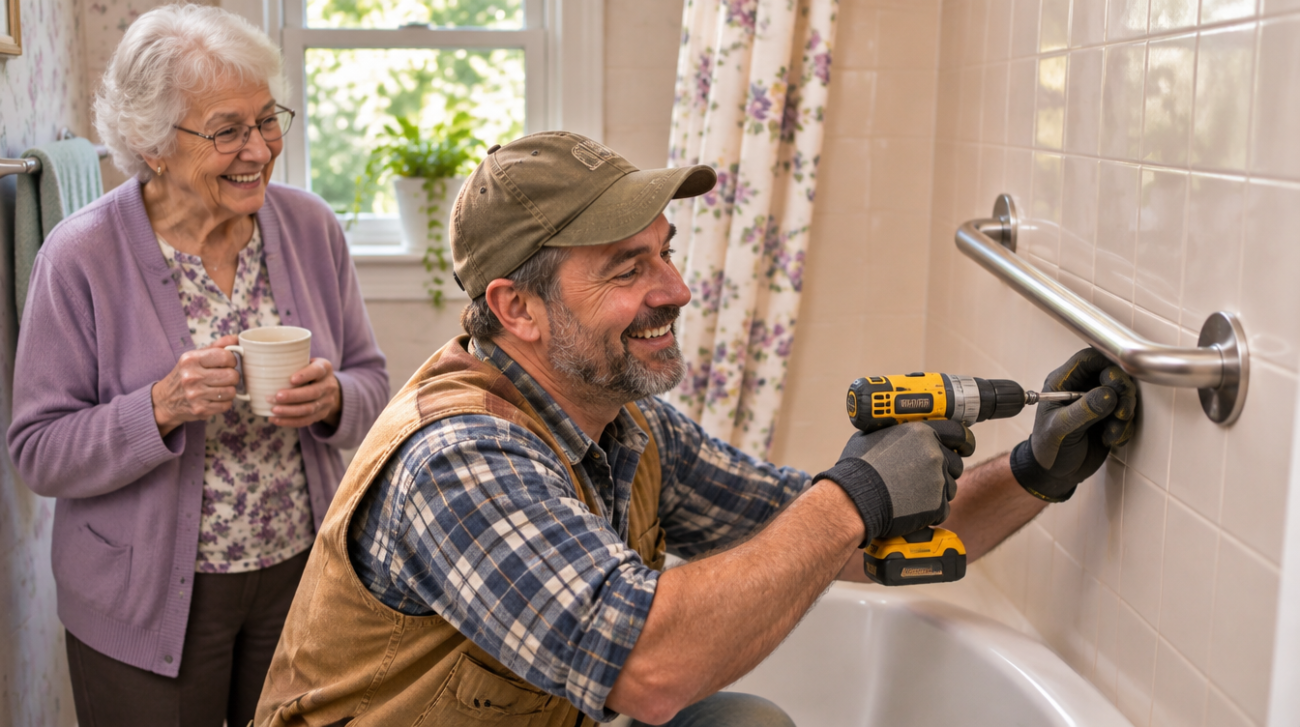
Yes, home repair grants for seniors exist, and most older homeowners never claim them. The biggest federal one, USDA Section 504, gives up to $10,000 to homeowners aged 62 or older in rural areas. Nearly everything else is handed out locally, through Area Agencies on Aging, city housing offices and nonprofits. The fastest way in is one free phone call to the Eldercare Locator at 1-800-677-1116.
Most guides on this topic give you a long list of programs and leave you to work out which one fits. This one starts with your situation: where you live, your income, whether you served in the military and how urgent the repair is. Then it shows you the program to call first, the papers to have ready and how to avoid the “free grant” scams that target older homeowners.
Key takeaways
- USDA Section 504 offers grants of up to $10,000 to rural homeowners aged 62+ with very low income, plus 1% loans of up to $40,000.
- Your local Area Agency on Aging is the best first call if you are 60 or older. Find it through the Eldercare Locator.
- Veterans with qualifying service connected disabilities can get far larger VA grants, up to $126,526 in fiscal year 2026.
- Many programs have waiting lists, so apply early and to more than one.
- No real government agency will call you and ask for a fee to release a grant.
Start here: which program fits your situation?
Use this table to pick your first call. You can apply to several programs at once, and many homeowners combine help from two or three.
| Your situation | Call first | What you can get |
|---|---|---|
| Age 62+, rural area, very low income | USDA Rural Development (Section 504) | Grant up to $10,000, loan up to $40,000 at 1% |
| Age 60+, anywhere in the U.S. | Area Agency on Aging via the Eldercare Locator | Repair and modification funds, referrals to local programs |
| Age 62+, low income, need safety changes (grab bars, rails, ramps) | Local grantee of HUD’s Older Adults Home Modification Program | No cost modifications, often after an occupational therapist visit |
| High heating or cooling bills, drafty home | State weatherization agency | Free insulation, air sealing and furnace repair |
| Veteran with a service connected disability | VA housing grant team | SAH, SHA or HISA grant |
| On Medicaid and need accessibility changes | Your state Medicaid waiver program | Ramps, wider doorways, bathroom changes |
| Need hands-on help with smaller repairs | Rebuilding Together or Habitat for Humanity affiliate | Free repairs by volunteers and contractors |
Federal home repair grants and programs for seniors
1. USDA Section 504 Home Repair loans and grants
This is the main federal grant aimed at older homeowners. According to USDA Rural Development, the maximum loan is $40,000 and the maximum grant is $10,000, and the two can be combined for up to $50,000. Loans carry a fixed 1% rate over 20 years.
To qualify, you must own and live in the home, be unable to get affordable credit elsewhere and have income below the very low income limit. That limit is 50% of the area median income. For the grant, you must also be 62 or older. The home has to be in an eligible rural area, which you can check by address on the USDA eligibility map.
Grants can only be used to remove health and safety hazards, such as a failing roof, unsafe wiring or a broken septic system. Loans can also cover general repairs and modernization. One catch: the grant must be repaid if you sell the house within three years.
2. HUD Older Adults Home Modification Program
HUD funds this program, but you never apply to HUD directly. HUD gives competitive awards to nonprofits, local governments and housing authorities, which then do the work. The program’s aim is low cost, high impact modifications that cut the risk of falls and help seniors stay in their homes, and HUD published a new round of funding for fiscal year 2026.
Eligible homeowners are low income and at least 62 years old. New York City’s version shows what to expect: the city’s Department for the Aging offers a home assessment by an occupational therapist followed by no cost modifications, and asks for proof of age, residence and household income. To find a grantee near you, ask your Area Agency on Aging or your city’s aging department.
3. Weatherization Assistance Program
The U.S. Department of Energy treats households at or below 200% of the poverty guidelines, or receiving Supplemental Security Income, as eligible for weatherization services. Work can include insulation, air sealing, energy related minor repairs and furnace repair or replacement. Many states give priority to seniors and people with disabilities. Contact your state weatherization agency to apply.
4. Older Americans Act funds through your Area Agency on Aging
If you are 60 or older, the Administration for Community Living recommends checking with your local Area Agency on Aging to see whether you qualify for repair and modification funds from Title III of the Older Americans Act. What is available differs by county. Even where funds are short, the agency knows which local grants and nonprofits are taking applications this year, which saves you weeks of searching.
5. VA housing grants for disabled veterans
Veterans with certain service connected disabilities have access to some of the largest home grants in the country. The VA lists maximums for fiscal year 2026 of $126,526 for the Specially Adapted Housing (SAH) grant and $25,350 for the Special Home Adaptation (SHA) grant. A separate, smaller HISA benefit helps with medically needed changes. Eligibility depends on the qualifying disability, so these grants are open at any age.
6. Medicaid home and community based services waivers
Many states pay for home modifications through Medicaid waivers that help people stay out of nursing homes. Ohio’s rules, for example, list ramps, grab bars, wider doorways and changes to bathroom or kitchen facilities among covered adaptations. Each state runs its own waivers with its own waiting lists, so ask your Medicaid case manager or your Area Agency on Aging which one applies to you. If a disability is the main reason for the work, also see our guide to home repair assistance programs for disabled individuals.
State and city repair programs
Local programs fill many gaps. A Harvard Joint Center for Housing Studies report found that over half of major U.S. cities offer home repair loan programs and nearly a third have grant programs, as summarized by The Penny Hoarder.
Two examples from Los Angeles County show how these work. The county’s Senior Grant Program serves owners over 62 with income at or below 80% of the area median who live in single family homes in certain unincorporated areas. Neighborhood Housing Services of Los Angeles County runs a Senior Minor Home Repair Grant Program of up to $5,300. Your city or county likely has its own version. Search your county name plus “senior home repair program”, or ask your city housing department about “owner occupied rehab”.
Nonprofits that repair seniors’ homes for free
Rebuilding Together has local affiliates across the country that make free repairs for low income homeowners, often giving priority to older adults, people with disabilities and veterans. The Houston affiliate, for example, asks for proof of age, home ownership and income, then puts approved homes on a waiting list until funds and volunteer crews are available.
Habitat for Humanity affiliates in many areas run aging in place and home repair programs. Local churches, senior centers and volunteer handyman groups often handle smaller jobs such as grab bars, railings and minor plumbing.
How to apply: a simple 5 step plan
- Call the Eldercare Locator. Dial 1-800-677-1116 or visit eldercare.acl.gov to get your Area Agency on Aging. Ask which repair programs are open now.
- Check rural eligibility. Enter your address on the USDA eligibility map. If it qualifies, contact your USDA Rural Development office about Section 504.
- Build your document folder. Most programs ask for a photo ID, proof of age, proof you own and live in the home (deed or property tax bill), income proof for everyone in the household (Social Security award letter, pension statements, tax return) and a homeowners insurance statement.
- Get one written repair estimate. A contractor’s quote helps the agency judge the size of the job. Do not sign a work contract before approval, because most programs will not pay for work already done.
- Apply to more than one program. Waiting lists are common. Applying to two or three at once raises your odds of getting help this year.
What to do if the repair cannot wait
A leaking roof or a dead furnace in January will not wait for a waiting list. For roofs, our guide on how to finance a roof replacement also covers insurance claims and state roof grants. Tell every program that the repair is an emergency, because many keep a separate fast track for health and safety hazards. If you still need to borrow, compare low cost options first, including credit union loans and FHA Title I. Our guide to a home improvement loan with bad credit walks through each one and what it really costs.
How to spot a home repair grant scam
Scammers know seniors need repairs and want to stay at home. The FTC warns that scammers promise free government money for things like home repairs and household bills, and that no government agency will ever contact you to demand payment for a grant. Watch for these red flags:
- A call, text or social media message saying you qualify for a grant you never applied for.
- Any fee to “release”, “process” or “insure” a grant.
- Requests for your bank account, Social Security number or Medicare number by phone.
- A contractor who says a grant will cover the job and asks you to sign over payment.
If you are unsure, hang up and call your Area Agency on Aging or the program’s official office directly. Report scams at ReportFraud.ftc.gov. If a contractor takes the money and leaves, see our guide on what to do if a contractor does not finish the work.
Repairs that make the biggest difference
When funds are limited, programs usually put safety first. Fall prevention changes such as grab bars, stair railings, better lighting and step free entries are cheap and qualify almost everywhere. For a room by room list, read our guide to home modifications for seniors aging in place. Bigger jobs such as roofs, heating systems and plumbing are more likely to need USDA funds, a local grant or a combination of grant and low interest loan.
Frequently asked questions
Does the government give free money to seniors for home repairs?
Not as a general handout. Federal help is tied to specific programs with income, age, location or disability rules, such as USDA Section 504, weatherization and VA housing grants. Many of these pay for the work directly or send crews to do it.
What is the income limit for USDA home repair grants?
Household income must be below the very low income limit, which is 50% of the area median income. The exact dollar amount depends on your county and household size, and USDA publishes the limits on its eligibility site.
Can I get a home repair grant if I live in a city?
Yes, though USDA Section 504 is only for rural areas. City residents should look at Area Agency on Aging funds, HUD home modification grantees, weatherization, city or county repair programs and nonprofits such as Rebuilding Together.
How long does it take to get a senior home repair grant?
It varies widely. USDA says approval times depend on funding in your area, and many nonprofits keep waiting lists. Plan for weeks to months, and ask each program whether it has an emergency track for urgent hazards.
Do I have to pay back a home repair grant?
Usually not, as long as you follow the rules. USDA Section 504 grants must be repaid if you sell the home within three years, and some local programs use forgivable loans that you repay only if you sell or move before a set date. Read the agreement before you sign.
Sources
- USDA Rural Development, Single Family Housing Repair Loans and Grants
- DisasterAssistance.gov, Section 504 program description
- HUD, Older Adults Home Modification Grant Program (FY 2026 notice) and NYC Department for the Aging application
- U.S. Department of Energy, How to Apply for Weatherization Assistance
- Administration for Community Living and Eldercare Locator
- U.S. Department of Veterans Affairs, Disability housing grants for Veterans
- Ohio Administrative Code 5160-44-13, home modification services
- The Penny Hoarder, How to Find Home Repair Grants for Seniors (Harvard JCHS findings)
- Los Angeles County Development Authority and NHS of Los Angeles County program pages
- Rebuilding Together Houston program listing
- Federal Trade Commission, How Government Grant Scammers Try To Trick You
Program amounts and rules were checked in November 2026 and can change each fiscal year. Confirm current details with each agency before you apply.