

Chemical extinguishers put out Class B and C fires in American homes and shops by suffocating flames with dry mono-ammonium phosphate or sodium bicarbonate.
Stored-pressure steel cans, color-coded blue or red, weigh 5 to 20 pounds and fit under most kitchen or workbench shelves. UL-rated 5-B:C models sell for $25 to $60 at Home Depot and Lowe’s across Los Angeles County.
Maintenance involves one annual shake and a six-year shop refill. Here, we detail how to select, position, and inspect one.
Decoding American Fire Classes
The US categorizes fires into five classes. Selecting the wrong agent transforms a small flame into a big problem.
- Class A: wood, paper, cloth, plastic
- Class B: gas, oil, alcohol, solvents
- Class C: live wires, panels, computers
- Class D: magnesium, titanium, sodium, zirconium
- Class K (F): cooking oils, fats, greases
Each fuel rests on a color-coded symbol on modern extinguishers. Squirt water into flaming oil or a live panel and you push the fire; you don’t stop it.
Combustibles
A is ordinary solids—cardboard in an office, a tossed cigarette in a mulch bed, or a pine board in a garage. Dry chem powders melt and smother, plain water soaks and cools.
Two-A two and a half gallons of H₂O pull CO₂ alone appears neat, but it stirs hot embers that can reignite once air drifts back.
Liquids
Gasoline, paint thinner and bourbon ignite quickly. Heat flashes back to the can, and reignition is common.
Approved agents for Class B:
-
CO₂ – chokes flame without residue
-
Dry chem – knocks down vapors
-
Alcohol-proof foam – seals polar solvents
-
Clean agents like FE-36 – safe on electronics
Water jet only splatters the fuel.
Electrical
Energized wiring, server racks, or a live space heater are Class C. Non-conductive CO₂, clean halocarbon, or dry-chem ABC unit.
Dielectric test labels confirm the wand won’t arc. Kill the breaker first. The fire drops to straight A or B.
Metals
Magnesium bike frames, titanium dental labs, sodium drain cleaner, or zirconium shop scraps burn white hot. Water explodes.
Each metal needs its own dry-powder blend: Sodium chloride for magnesium and copper for lithium. Shovel grit or argon flood works if the powder is gone.
Kitchens
Deep fryers, woks, and tilt skillets carry Class K (F) oils, which require specialized fire extinguishers for effective protection. Decoding American fire classes involves using wet-chemical agents like potassium acetate that spray a soapy coating, cooling and sealing the surface to prevent class K fires from spreading.
Water mist can explode, so it’s crucial to tap it away. Additionally, commercial hoods must auto-dump the same multipurpose agent at set temperatures to ensure optimal performance and safety in the kitchen.
The Core Extinguisher Showdown
|
Type |
Speed |
Residue |
Toxicity |
Cost (5-lb) |
Best Fire Class |
|---|---|---|---|---|---|
|
Water |
Slow |
Soak & warp |
None |
$45 |
A only |
|
Foam |
Med |
Slippery film |
Low |
$60 |
A & B |
|
ABC Dry Chem |
Fast |
White dust |
Mild lung |
$55 |
A, B, C |
|
CO₂ |
Fast |
Zero |
High CO₂ |
$120 |
B & C |
|
Wet Chem |
Fast |
Greasy film |
Low |
$90 |
K only |
ABC dry chem portable fire extinguishers take the all-around winner’s badge for speed, price, and range.
Suppression Method
Water-based units drop the fuel below 212 °F, so a flaming wood chair bench cools in approximately 30 seconds.
Foam lays a skin across gasoline, starving air, think dish soap on a fryer.
Dry chemical sprays mono-ammonium phosphate that disrupts the chain reaction, like slicing through a path of dominoes falling.
CO₂ floods the zone, shoving oxygen aside. Once the cloud blows away, there’s nothing to mop up.
Target Fires
Pair the tool with the fuel. Clear water soaks Class A trash, but hurl it on a fryer and the steam blast vomits burning oil all over the room.
Foam extinguishes both paper and floating fuels such as kerosene.
ABC powder literally tags solids, liquids, and live wires, so one red can covers ninety percent of office hazards.
Wet chemical, which sits under most L.A. Food-truck hoods, converts hot oil into soapy foam. Spray it on a laptop and you’ll be left with a corrosive puddle.
Collateral Damage
Water destroys laptops quicker than flame.
Foam leaves slick floors that sent a Burbank chef to urgent care last year.
ABC dust sneaks into copier gears. 2023 UCLA research discovered motors malfunction at double the speed following exposure.
CO₂ won’t rust steel, but in a 200 ft² server closet it can push oxygen below 16 percent—enough to drop a tech who stays to check the racks.
User Safety
Stand 6 feet back with dry chem, 3 with CO2, closer and the jet bounces back.
The initial blast is as loud as 95dB, which is equivalent to a lawn mower.
Keep an exit at your back. A Glendale warehouse worker trapped himself in a dead-end hall last March.
Run a live drill each year: pull the pin, aim low, squeeze, and sweep.
Cost and Upkeep
A 5-lb ABC unit costs $50 at Home Depot and has a $20 recharge every six years.
Clean-agent Halotron costs over $300 and requires a hydro test at twelve years.
The hose and gauge were swapped at the same mark.
The dry rot cracks the line and the gauge sticks on ‘full’ even when the tank is half gone.
The Chemistry of Suppression
Fire keeps burning only as four legs of the tetrahedron stand: heat, fuel, oxygen, and a self-sustaining chain of radicals. Knock out any leg and the fire folds. Chemical extinguishers pick the easiest target for each fuel class.
Wet chem on a fryer cools oil below 360°F as its soap-like film smothers vapors. Dry mono-ammonium phosphate cakes solid fuel and jams the radical chain even at a five percent throw. Vaporizing liquids such as Halon 1211 or its newer cousin FK-5-1-12 slip in at just three percent by volume, break the chain, then evaporate without a trace.
Speed matters. The agent must pull heat away faster than the material can climb back to its auto-ignition point, or the flame simply restarts.
Smothering Action
Foam and wet chemical leave a thin watery film that locks vapors in place, just like a lid extinguishes a pan fire. Carbon dioxide pours into the hood until oxygen falls from 21% to around 14%, which is too lean to combust but is just fine for a short human sprint.
Powdered sodium bicarbonate falls, cakes, and seals the metal surface into a chalky shell that air cannot creep through. Blankets tamp out only as long as they remain intact. Poke the heap and the fire rouses.
Chain Reaction Break
Mono-ammonium phosphate powder spits out free radicals that hunt flame ions and glue them into stable salts. FK-5-1-12 soaks up heat so fast that the reaction front stalls before it can feed new radicals.
Mills grind these powders to under 20 microns so each gram has more face to kiss the flame. UL 711 times the knock-down: under thirty seconds on a five-square-foot pan or the formula fails.
Cooling Effect
Water mist nozzles eject 50-micron drops that flash to steam and pull 2.6 megajoules per kilogram from the fire’s seat. Our wet-chem hood system can cool a fryer from 680 degrees Fahrenheit down past 540 degrees Fahrenheit in six seconds, under oil’s reignition line.
Mix in some propylene glycol antifreeze and the tank cruises through Dakota loading dock nights that dig as low as minus 40 degrees Fahrenheit. That same coolant trick keeps lithium-ion racks from racing away when one cell vents; cool gas floods the module before neighbors jump in the runaway.
Choosing Your Fire Defender
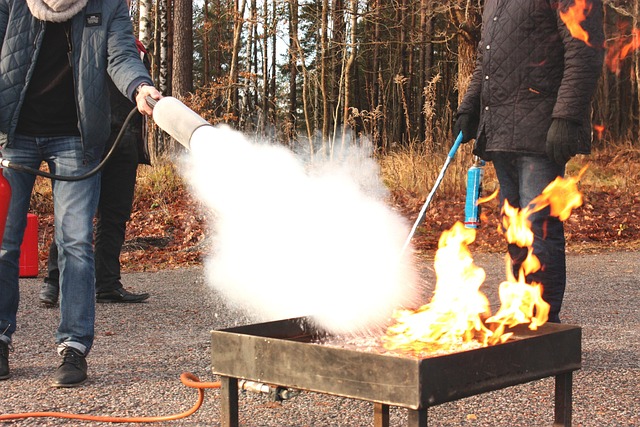
Select your fire defender. One 5-lb ABC can effectively cover a 75 ft walk down an office, a ranch house hall, or a 2-bay garage. Plot the route with a tape measure. If the trip maxes out at 80 ft, include a second can.
Multi-hazards—paper, gas cans, wires—need ABC. Metals or deep-fat fryers need specialty tags: Class D for magnesium grindings and Class K for restaurant oil. Check the city fire sheet before you buy. Some LA strip malls now demand a 3-A:40-B:C as the minimum rating, and the fine starts at $500 if an inspector spots less.
For Businesses
OSHA requires a 2-A rated extinguisher for every 3,000 square feet of floor. For a 2,800 square foot yoga studio, one unit is needed. For a 6,200 square foot warehouse, three units are necessary.
Kitchens with fryers over 1.6 gallons should keep a Class K within 30 feet; mount it by the door, not above the splash zone. Data rooms favor clean-agent five-pound units, such as FE-36 or Novec, so no white dust kills the servers. Post a four by six inch pictogram at eye level and run a five-minute drill once a year.
The sign and roster keep the fire marshal happy and drop insurance quotes by five percent.
For Homes
Place a 5-lb ABC on the egress side of your kitchen, not under the stove where the fire comes out first. In the garage, place a CO2 unit for the welder and spare jerry cans. It doesn’t leave a mess on the truck’s paint.
Screw the hallway bracket 54 inches off the floor so kids and grandma both reach for it fast. Mark the purchase date on the calendar. Steel bodies make it 12 years and plastic heads do six before replacement.
For Vehicles
Strap a 2-lb ABC with a metal bracket behind the passenger seat or trunk bulkhead. Velcro blows at speed. Select a gauge rated minus 40 degrees Fahrenheit to 140 degrees Fahrenheit so mountain runs or desert hauls don’t freeze or burst it.
Once a month, turn the can over and sense the powder stir. If it feels like one solid chunk, whack and shake or replace. Any discharge, even a half-second, or a fender-bend that cracks the plastic head means a new unit—no exceptions.
For Workshops
Have a 10-lb ABC within 10 ft of solvent shelves and paint racks. Mark it ‘A-B-C’ with duct tape so nobody grabs water by accident. Dump Class D dry powder into a bright-red 5-gal bucket and place it adjacent to the aluminum grind wheel.
Scoop, don’t spray, on turnings. Keep all cans off the floor and away from sawdust piles. Clogged valves extinguish pressure quickly. Glue a fuel-type decal—wood, oil, metal—on every zone.
When smoke bursts, nobody loses a second wondering.
Proper Use and Maintenance

A chemical fire extinguisher that just sits in the red is essentially a wall ornament. Monthly checks take only 30 seconds: read the gauge, log the date, and give the can a quick shake to prevent the powder from caking into a brick. Annually, have a certified technician pull the valve, weigh the charge, and swap the O-ring, ensuring the seal is tight and the gas remains where it belongs.
The P.A.S.S. Method
Pull the pin completely out, not halfway, which leaves the tamper strip flapping and the valve sealed. Take a low shot at the burning fuel or rubbish, not at the flickering flames you observe above. Squeeze the lever like you mean it, but don’t jerk. A smooth motion keeps the stream steady and buys you seconds.
Sweep side to side in small arcs, pressing the fire down across itself until all cools and blacks. If the fire flares up again, begin again. Most kitchen grease fires require two short blasts, not one long hose down.
Inspection Routines
Test the dial first. If the arrow wafts left of the green pie slice, pressure has vented and the unit won’t survive five seconds. See the pin and lead-wire seal. A missing or clipped seal means that someone already popped it for fun and forgot to inform you.
Bend the hose, rummage for sun-baked fissures, and thrust a pen through the bell to purge carcass-loving mosquitoes who nest within. Wipe steel shells with a rag dipped in dish soap. Road salt and LA smog chew through paint and invite rust pits that NFPA 10 considers cause for retirement.
Recharge vs. Replace
Any discharge, even just a couple-second test shot, lowers pressure beneath specs and leaves residual powder packed in the siphon tube. A $20 refill sure beats guesstimating during an emergency. Dents deeper than 1/4 inch or rust spots that pit more than 10% wall thickness make the cylinder scrap metal.
Don’t play Russian roulette with a can that could split at the seam. A new 5-lb ABC unit costs around $60 at Home Depot. So, if yours requires a valve stem, gauge and paint, it’s more cost effective to replace. Look at the manufacture date stamped on the collar. After 12 years, most shops won’t touch it, so expect to rotate before the birthday passes.
Eco-Friendly Disposal
Whew, drive used-up cartridges to the county’s hazardous-waste yard in Playa del Rey. They will release the valve and you can throw the empty canister into the steel scrap heap. Never pour mono-ammonium phosphate down the sink. It solidifies like cement and will clog your condo pipes quicker than oatmeal.
Strip the plastic discharge horn first. Recyclers give clean steel rates only when no rubber components are left. Save the date for the LAFD’s “round-up” every May. Crews will pick up old cans for free and distribute coupons toward new ones.
The Future of Fire Suppression
Chemical extinguishers are shedding old skin. Halon 1301, once the gold standard for server rooms and jets, was phased out under the 1994 Clean Air Act since it tears up the ozone layer. Makers swapped it for fluorinated ketones such as FK-5-1-12, a fluid that snuffs flames yet breaks down in five days.
Novec 1230, another newcomer, has a global-warming score of 1, which is low enough that California data centers now choose it to meet state climate rules. On the horizon are smart sensors tied to micro-mist nozzles that release less than a gallon per minute and wet-chemical blends built from sugars and plant oils that microbes eat once the mess hits the drain.
Clean Agents
HFC-227ea, FK-5-1-12, and inert gas blends like argon-nitrogen mix do three things well: leave no film, kill ozone zero percent, and exit the air fast. A sealed 1,000 cubic foot room keeps a 5 percent concentration for ten minutes, which is long enough to cool a server rack below reignition temperature.
Expect to pay about $7 to $8 per pound, which is roughly 25 percent more than a CO₂ flood system, but you skip the cleanup bill.
Smart Technology
IoT pressure monitors screw into the valve stem and text “LOW” when the gauge falls two psi. RFID tags glued to the bottle shoulder let a phone scan date, tech name, and agent weight—no paper log.
Thermal cameras above a paint booth spot a 200º hot spot and instruct the panel to discharge a micro-mist pre-discharge before any flames appear. Early pilots in Texas refineries suggest that soon AI maps of warehouse heat layers will highlight areas where an extinguisher is absent.
Material Science
Labs at Ohio State discovered that nano-powders of cupric oxide reduce knock-down time by 50 percent compared to mono-ammonium phosphate. Graphene sheets woven into fire blankets pull heat from a laptop battery runaway so fast that neighboring cells stay below 140 degrees Fahrenheit.
envision cornstarch water that solidifies when struck—allow a cartridge to fire, layer, and be vacuumed up for repeat use. Down in Georgia Tech, polymer capsules melt at 150 degrees Celsius and release wet suppressant right onto a stove-top chip pan.
Conclusion
Pick up the appropriate chemical extinguisher for your area and zip code. Test the pull pin every New Year. Change it every 12 years or after use. That little red can kicks a five-alarm fire and one hundred thousand dollars in reconstruction any day. Fang one up this weekend, tag it with the buy date and demonstrate the PASS drill to the kids. You keep the house, the dog and your salary intact for the price of a large pie.
Frequently Asked Questions
Which chemical extinguisher fits a Los Angeles kitchen?
A 5-pound ABC dry-chemical extinguisher is a portable fire extinguisher that effectively douses cooking oil, paper, and electrical fires, making it ideal for LA flats.
How long does a chemical extinguisher last in California heat?
10-12 years if the gauge remains in the green
About: chemical extinguishers. Replace them every six years for commercial locations to remain current with L.A. County fire code.
Can I recharge my extinguisher in L.A.?
Yes. Bring it to a certified shop on the California State Fire Marshal website for portable fire extinguishers. Recharge costs $15 to $25, which is far less than a new one.
Does the dry chemical hurt my electronics?
The powder is corrosive; once you spray a portable fire extinguisher, turn energy off and vacuum residue quickly to protect laptops and TVs.
Where do I toss an old extinguisher in L.A.?
Drop it at a S.A.F.E. Center on Hyperion or Sun Valley! They accept portable fire extinguishers, including metal and plastic shells, for free.
Do I need training to use one at work?
Cal/OSHA says yes for businesses. A half-hour hands-on class each year keeps crews fresh and helps dodge fines, providing essential fire extinguisher training.