

Bio-pest management is the use of living organisms such as insects, mites, or weeds for pest control. It uses natural enemies like predators, parasites, and pathogens to suppress pest populations.
It is a staple of IPM programs in large farms and in gardens. Employing these tactics allows for a more balanced ecosystem, minimizing the necessity of chemical pesticides.
We will discuss how to use them in this guide.
What is Biological Pest Management?
Biological pest management, or biological control, is the use of living organisms to control pests. It relies on natural mechanisms such as predation, parasitism, and disease to control insects, weeds, and plant pathogens. It is the cornerstone of integrated pest management (IPM) programs, seeking to minimize the use of synthetic chemical pesticides through biotic manipulation of an ecosystem.
Although modern methods date back to the 1870s, it is an ancient idea with primitive forms being used in ancient China.
1. The Core Philosophy
The concept behind biological control is to establish a self-perpetuating system for long-term pest suppression instead of attempting instant elimination. This means truly comprehending a pest’s ecology — its life cycle, habits, and natural interactions.
By encouraging natural enemy activity, the strategy creates a balanced ecosystem where pest populations remain under damaging thresholds. The objective is not to exterminate a pest, but to keep its population at a level that can be managed economically and ecologically indefinitely.
This makes it a proactive rather than reactive approach.
2. The Natural Enemies
Biological control agents are typically categorized according to the nature of their interaction with pests.
Predators are those that seek out and eat their prey. A popular one is the lady beetle, which consumes aphids.
eventually These include wasps that lay their eggs in caterpillars.
Pathogens are bacteria, fungi, and viruses that make pests sick. Bt, or Bacillus thuringiensis, is a common bacterium used to control specific insect larvae.
3. The Strategic Approaches
One such means is conservation, which cultivates habitats that preserve natural enemy populations. This might be something as easy as sowing flowering borders that attract such insects by providing them with nectar and pollen or adapting farming practices to not unintentionally kill them.
Another option is augmentation — buying and releasing large numbers of natural enemies to add to the existing populations. This method is often used in greenhouses to swiftly quell a pest infestation.
A third strategy, importation or classical biological control, transports a natural enemy from a pest’s native region to control an exotic invasive species. This demands significant research to make certain the agent introduced will not harm non-target organisms or the local ecosystem.
4. The Key Distinction
Biological control couldn’t be more different from chemical. Its agents tend to be extremely specific and focus on very limited pest species.
This specificity is a far cry from broad-spectrum insecticides, which indiscriminately kill beneficial insects and other non-target organisms.
The goal is sustainable population control, not complete elimination. This approach helps avoid the boom-and-bust cycle that is so prevalent with chemicals.
The Agents of Biocontrol
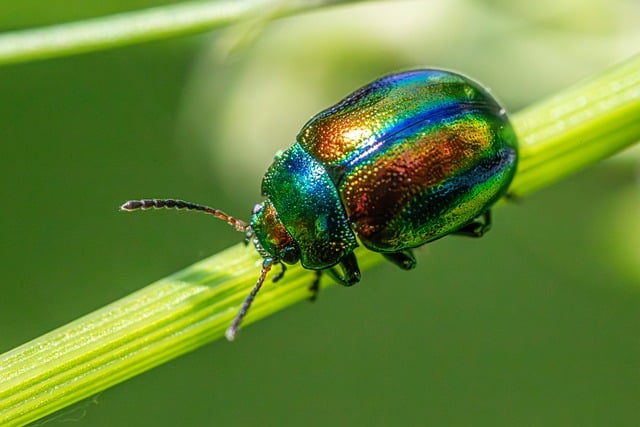
Biological control depends on a community of biocontrol agents to fight pest populations. The concept of deploying these natural foes attracted widespread interest by the early 1930s and has since become a pillar of integrated pest management. These agents fall into four main categories: predators, parasitoids, pathogens, and herbivores. Choosing the appropriate agent for the appropriate pest is an important key for success and to prevent collateral damage, such as harming native species.
Predators
Predators kill their prey during capture and typically consume many prey per lifetime. They tend to be generalists, though numerous ones can be very efficient specialists for some pests.
-
Lady Beetles: Commonly known as ladybugs, these insects are highly effective predators. Their larvae are ferocious eaters of aphids, mites, scale insects, and small caterpillars.
-
Ground Beetles: This large family of beetles includes many species that feed on slugs, snails and insect larvae in the soil, helping to control pests at the ground level.
Predatory mites are another important category, particularly for addressing spider mites and other tiny critters in greenhouses and on crops.
Beyond insects, a few vertebrates lend a hand in pest control. For example, birds and bats that eat insects can suppress populations of flying insects and caterpillars in farm and forest ecosystems.
Parasitoids
Parasitoids are insects whose immature larval stage lives on or in a single host insect, eventually killing it before emerging as an adult. Unlike parasites, which do not normally lead to the death of their host, a parasitoid’s life cycle is lethal for its target. That makes them powerful agents.
They tend to be extremely host-specific, down to one species or a limited spectrum of hosts. Various kinds are available, such as egg parasitoids that attack the pest’s egg phase and larval parasitoids that target developing larvae.
- Parasitoid Wasps: Tiny wasps, such as those in the Trichogramma genus, lay their eggs inside the eggs of moths and butterflies. This prevents caterpillars from ever hatching.
- Tachinid Flies: These flies resemble house flies but lay their eggs on or near host insects like beetles, grasshoppers, or caterpillars. The maggot bores into and devours the host internally.
Pathogens
Pathogens are bacteria, fungi, or viruses responsible for disease in their host. In biocontrol, they can generate epidemics in a pest population. Several have been developed as microbial insecticides, which can be deployed in a manner similar to traditional chemical sprays.
One of the benefits of pathogens is their specificity. Most work on a narrow spectrum of closely related insects, meaning there is less risk to non-target organisms like pollinators or other beneficial insects.
-
Bacteria: Certain bacterial strains, like Bacillus subtilis, can be used as a seed treatment to decrease pest populations and improve plant growth.
-
Fungi: Some fungi are natural insect killers. For instance, Lagenidium giganteum is a water-borne mold that preys upon and exterminates mosquito larvae.
-
Viruses: RNA mycoviruses are being explored as a way to control various fungal pathogens that damage crops.
Herbivores
Herbivores are employed in biocontrol to attack invasive or noxious weeds. They are usually insects or plant pathogens that consume and harm the weed.
To weaken the weed’s ability to compete with native or desirable vegetation, classical weed biocontrol frequently entails importing a specialist herbivore from a weed’s native range.
Making sure that they are host specific is crucial. Prior to releasing any herbivore, we test it thoroughly to make certain it cannot eat or harm any other plants besides the invasive one, particularly not native plants or crops.
The APHIS Biocontrol Program
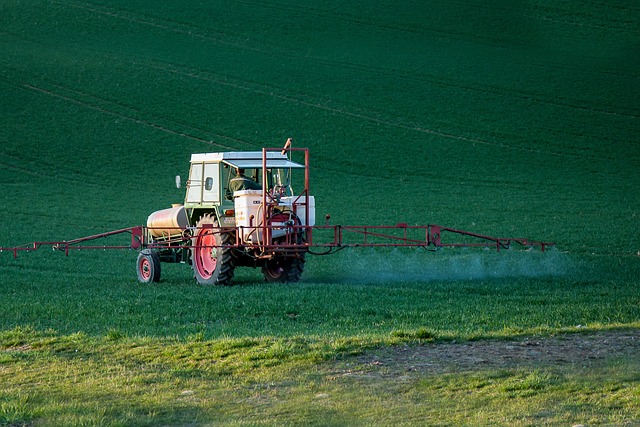
The Animal and Plant Health Inspection Service (APHIS) Biocontrol Program is one of the U.S.’s principal federal biological pest management efforts, protecting our country’s agriculture and natural areas. Run by the U.S. Department of Agriculture, this program endeavors to source, test, and release natural predators to invasive insects, weeds, and plant diseases. Its goal is to mitigate the damage caused by invasive pests in an environmentally safe and economically efficient manner.
Centered on biological processes, APHIS provides an option to chemical pesticides that may impact broader ecological systems. It is a major reason why our farms remain productive and our wildlands remain healthy nationwide.
Protecting agriculture and natural resources from threats posed by invasive species is a major focus of the program. quickly For farmers, this could translate into damaged crops and reduced income. For natural areas, it can translate into native plants being dislodged and animal habitats annihilated.
APHIS’s Plant Protection and Quarantine (PPQ) division is at the heart of this work. PPQ staff source and authorize the release of biocontrol agents, such as certain insects or pathogens, that exclusively attack a single invasive pest. This way, they can restore balance to the ecosystem without damaging native species or crops.
It’s the classical biocontrol that the program is best known for. This technique means traveling to a pest’s homeland in search of its natural controls and then, after extensive research, introducing them to the U.S. For instance, to combat the emerald ash borer, which has destroyed millions of ash trees, APHIS authorized the deployment of several species of minute parasitic wasps imported from Asia that deposit their eggs in the borer’s larvae.
Another example is a particular beetle used to control the purple loosestrife, a jealous wetland plant. These projects require years of research to guarantee that the new agent will not become a problem itself. It’s this cautious, science-informed approach that earns the APHIS program its reputation as a trusted leader in biocontrol.
Real-World American Success Stories
The U.S. Has a long history of biological pest control, which generated a great deal of interest in the early 20th century before the agro-chemical industry took off. This organic method is underdogged and shows its results in real-world American triumphs. States such as California, Oregon, and Hawaii have been especially forward-thinking in employing biological controls, illustrating what can be achieved when nature-driven solutions are center stage.
They prove how a modest research investment can generate enormous economic and environmental returns. In the Pacific Northwest, spider mites were devastating the Washington apple industry. An integrated pest management program was instituted rather than chemical dependence. It cut chemical sprays by close to 96% and saved the industry nearly $3 million annually.
The region’s cattle industry was imperiled by tansy ragwort, a toxic noxious weed. The introduction of these two insect predators effectively put the weed on lockdown and prevented livestock losses, saving an estimated $4.8 million per year. These examples demonstrate how precision biological tools can safeguard essential industries.
Still other examples emphasize the targeted and efficient character of this approach. In another, a $30,000 research bet to control pests on nut crops saved about $400,000 a year in spray costs. This merely lowered costs, but minimized crop loss and pesticide residues.
The control of alligator weed with the flea beetle and a key grape pest with a parasitoid are additional proof of concept. Good monitoring — such as that for cherry fruit flies in Oregon’s Willamette Valley — nicely supplements these efforts by making sure agents are released when and where they’re most required.
The success of these specific crops implies that the other mainstays of American agriculture could make similar strides if supported with appropriate research funding.
The Economic and Ecological Reality
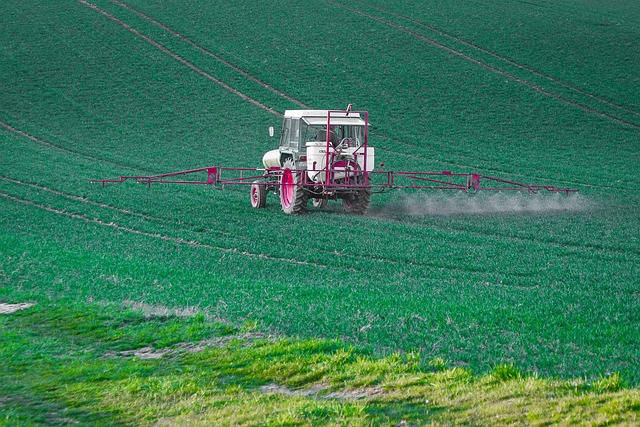
Biological pest management represents a pragmatic alternative founded on economic and ecological reality. For each of these, there are large environmental costs associated with many of today’s farming practices, from biodiversity loss to ecosystem damage. The widespread application of chemical pesticides tends to have unintended consequences, such as harming predators of pests and resulting in pesticide-resistant insects.
Here is where a more ecological mindset becomes necessary for incorporating the complicated connections between crops, pests, and their environment. Biological controls are an investment. For example, costs for revegetation are front-end loaded, whereas benefits occur over many years in a more resilient and self-sustaining system.
The switch to biocontrol is a win-win for the balance sheet and also the local ecosystem. Plant diseases alone can bring about losses of 13 to 22 percent in annual yields, at the cost of billions of dollars. Through the introduction of natural predators or parasites, growers can minimize these losses without the perpetual cost of chemicals.
It shields precious pollinators and other helpful critters that support crops without suffering the unseen expense of their loss.
|
Benefit Type |
Economic Advantages |
Ecological Advantages |
|---|---|---|
|
Pest Control |
Reduced spending on chemical pesticides. |
Targeted action on specific pests, minimizing harm to non-target species. |
|
Crop Yield |
Lower risk of pest resistance, leading to more stable long-term yields. |
Healthier soil and plant life owing to reduced chemical exposure. |
|
Ecosystem |
Enhanced pollination services from protected beneficial insects. |
Increased biodiversity and a more balanced, resilient ecosystem. |
|
Sustainability |
Long-term cost savings from a self-regulating system. |
Reduced chemical runoff into water sources and surrounding land. |
At its core, this approach is about supporting ecosystem health. Too long has pest management been a victim of thinking that was not ecological. By providing habitats for natural enemies through planting non-crop areas, we cultivate a scenery that regulates pest populations.
This approach, termed conservation biological control, has enduring advantages that models indicate accumulate over several years. It breaks from the reactive model of spraying and heads toward a proactive one of creating a healthy, functional ecosystem where pests do not emerge as a huge issue.
This promotes a more economically and ecologically sound agricultural reality.
Future of Biological Pest Management
The future of biological pest management appears bright as increasing numbers of individuals express concern over the environmental and health impacts of chemical pesticides. It relies on natural foes — predators and parasites — to keep the pests in check. It is a more specific and sustainable alternative to chemical pest control.
The future of biological pest management is heading toward intelligent and holistic solutions that combine emerging technology with established ecological principles. This transition emphasizes designing robust agro-ecosystems that synergize with, rather than oppose, natural processes.
Research and discovery of new biocontrol agents and technologies are a key part of this future. Scientists are looking beyond that by seeking out a broader diversity of natural agents and microbes for fresh biopesticides — pest control solutions made from living things. The goal is to develop wide spectrum biologicals that can be integrated into a larger IPM portfolio.
Now, an IPM program is only as good as its monitoring and scouting. Such practices assist growers in identifying pest infestations early, enabling them to make informed decisions about when and how to intervene. Good record keeping and data analysis play a big role, helping track pest levels and see how well management plans are working over time.
For these new approaches to take hold, we have to market them and really back growers up. This might involve promoting tactics such as planting insectary plants that draw in beneficial insects that feed on pests, building a mini-ecosystem defense system directly on the farm.
These new tools are only valuable if we can figure out how to use them. Education and training will be important. These programs can provide growers with the expertise required to effectively comprehend and implement biological pest management concepts.
With continuous research, hands-on training, and integrated strategies, biological pest management will be the future of farming for healthier farms and a healthier planet.
Conclusion
Biological pest management is the clever approach. It employs nature’s own laws to safeguard crops and green spaces. We see it work in places such as California, where friendly bugs preserve citrus groves. It reduces chemical inputs and contributes to a more lively ecosystem for all of us. The technique is not a silver bullet. It requires preparation and a solid grasp of your regional ecosystem. The long-term payoff for the economy and the planet is obvious.
Wish to witness how these techniques would work in your own garden or farm? See what your local university extension programs have for region-specific guides.
Frequently Asked Questions
Can I use biological pest control in my Los Angeles garden?
Yes! A good local example is releasing ladybugs to eat aphids on your roses or citrus. They are available at most LA-area garden centers. It is organic and highly efficient in our SoCal environment.
Is biological pest management safe for my family and pets?
Yep, that’s one of the major benefits. With biological pest management, we’re using natural predators, not synthetic chemical pesticides. This assists in making your yard and garden a significantly safer place for kids and pets to play.
Where can I buy beneficial insects in the Los Angeles area?
Most local nurseries and garden centers in LA County carry beneficial insects. Armstrong Garden Centers and specialty suppliers often carry ladybugs, lacewings, and praying mantises, particularly in the spring and summer.
Will these beneficial insects become pests themselves?
No, these agents are purposefully selected. They’re natural predators of certain bugs and they cannot become a pest themselves. Once their food (the pest) disappears, so does their population.
Does biological pest control work against invasive pests in California?
Yep, it’s a cornerstone strategy. State and federal programs, particularly APHIS, have already successfully deployed biocontrol agents to combat invasive species in California, like the glassy-winged sharpshooter, protecting our vineyards and native plants.