

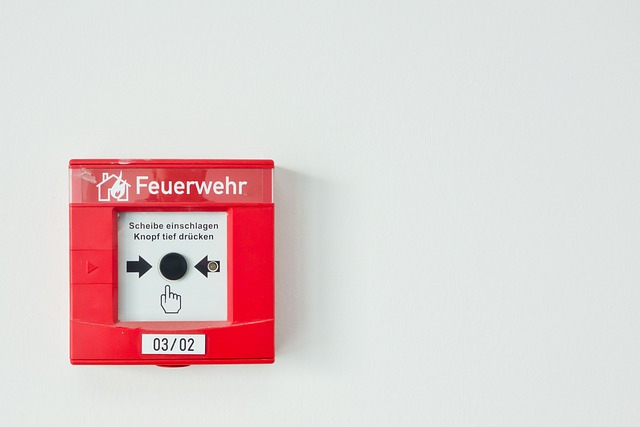
Fire alarm air sampling systems suck room air through concealed pipes to detect smoke at the earliest possible stage. They can detect fire prior to the presence of flames, providing the occupants with increased time to evacuate.
Labs and data halls in California and NYC are already exchanging old spot detectors for these units. The remainder of this post dissects how the pipe network, installation cost, and maintenance for US building codes.
How Air Sampling Systems Work
Air sampling smoke detection systems—known as ASD or Aspirating Smoke Detection—sip room air through pin-sized ports in a sealed piping network. A silent fan draws air samples into a laser detection chamber every few seconds. Inside, it beams counts of smoke particles well before your eyes register haze. When the count reaches 0.005 %–20 % obs/m, the panel sounds the alarm hours before conventional smoke detectors.
1. Air Collection
Sampling holes drilled every 10-16 ft (3-5 m) collect air from ceiling to floor. Each hole is 0.08–0.16 in (2–4 mm) wide so the aspirator retains only 1–5 % of its flow per port. This balance maintains suction strength.
In a snug L.A. Server cabinet, a 12-in (30 cm) capillary tube peeps through the vent and still clocks the same velocity as the mother line. Attach a mini flow sensor on the last port. If the reading dips, you know dust has snuck in ahead of a dead spot developing.
2. Pipe Network
Use 1-in (25 mm) ABS or CPVC looped back to the box so the last port experiences almost the same suction as the first. Stay under 330 ft (100 m) total per UL 268 to keep transit time < 30 s.
Add a dual-stage filter at the inlet: stage one traps desert grit larger than 0.001 in (25 microns), stage two catches finer lint that would cloud the laser. Mark every elbow and tee, on the CAD print; when the panel flags ‘Flow Fault,’ the tech walks right to the kink instead of guessing.
3. Detection Chamber
A 650 nm laser shoots across a black-anodized chamber. Smoke scatters light onto a photo diode. That card transforms scatter strength into % obs/m on real time.
The housing is light-tight. Even California noon sun through a skylight can’t trick it. Every night at 2 a.m. A puff of clean air wipes the optics, so sensitivity stays pegged at 0.005 % obs/m for years.
4. Particle Analysis
The built-in nephelometer sizes each bit: 0.5 µm, likely smoke; 5 µm, probably dust. The board deducts a fresh-air baseline recorded on install day, so typical office lint never registers.
Trend logs rise days before a li-battery bunk in a downtown e-bike emporium puffed and smoked; staff glanced at the graph and yanked the pack preflame.
5. Alarm Thresholds
Program four rungs: Alert 0.02 % obs/m for overheating GPUs in a Burbank post house; Action 0.2% calls personnel; Fire 1 at 1 % releases clean agent Fire 2 at 5 % closes HVAC and activates horn-strobe circuit.
Each covers a relay — so that very same box texts the tech, vents the room, unlocks the roll-up door for LAFD.
Types of Detection Technology

Choosing the proper source within your pipework determines whether you detect a plume or haunt a phantom, especially when utilizing air sampling smoke detectors. Here’s a fast glance at who does what, where they excel and where they complain.
Detector Type | Core Edge | Main Pain | Sweet Spot |
|---|---|---|---|
Laser-based | 0.005 % obs/m, 10-yr cell, no rad waste | High up-front cost, needs clean air filter swap | Data halls, cold-storage docks, L.A. high-rises |
Cloud chamber. Ignores dust, sees vapour, UL2075 gas add-on | Water pot must fill, bigger box | Mines, paint booths, waste-to-energy plants | |
Multi-criteria | Two-of-three vote discards false trips 80% More bits to go wrong | Lobbies, labs, any place that loathes midnight evac |
Laser-Based
One solid-state laser and a tuned receiver tally particles down to .0003 µm—approximately 1/30th the size of a grain of table salt—so smoke appears long before flames. Sensitivity comes in a 0.005 % obs/m; that’s a hundred times sharper than the antique ion noggins hidden in most condo corridors.
No americium capsule means no haz-cop disposal fees after ten years, and the diode typically makes it the entire decade even when the fan sucks 24/7 in a Valley warehouse. Vesda’s Laser Industrial boxes ship with a metal hood and extra coarse inlet screen so high airflow from dock doors doesn’t fool the count.
Exchange the two-filter pack bi-annually; 5-minute work with thumb screws.
Cloud Chamber
Air bursts into a cooled pocket, falls 30 °F in ½ second, and water clings to any smoke particle so it puffs up to optic dimension while dirt remains dry and undetectable by the sensor. That same trick detects flammable vapours when you add the UL2075 gas card; refinery stores like those along the Houston Ship Channel carry it as standard fare.
Water in the pot survives three months in Mojave-dry air; a float switch yells “fill me” before the chamber dries and ghosts counts.
Multi-Criteria
One cartridge stuffs laser nose, CO cell and thermistor that communicate before screaming fire. Require 2 yes votes within 10 seconds or panel remains silent—great news for hotel kitchens that sear steaks at 700 °F but still want life-safety coverage.
Information travels BACnet back to the building brain so trend charts indicate whether filters clog or staff keeps leaving carts beneath the sample port. Cartridge swap is 2 minutes, no pipe rework, no ladder time.
Why Choose Air Sampling?

Air sampling smoke detection systems utilize detectors that suck room air through a pipe matrix, flowing it past a laser chamber. A single air sampling detector can protect 20,000 sq ft and detect smoke at 0.00046 %/ft obscuration—around 1/1000th of the ceiling spot unit requirements. This gap provides 30–60 minutes before flames appear, allowing time to locate a hot cable or power strip and yank the plug.
Unmatched Sensitivity
One detector head watches over three basketball courts and still detects pyrolysis particles when PVC jacket hits 200 °F, well before the eye or a spot beam detects it. Barometric swings in Denver high-rises or coastal lows in Seattle shift room pressure.
The auto-gain circuit trims the laser power so sensitivity remains flat from –4 °F to 140 °F. Clean rooms, telecom huts and museum vaults like the Getty Center depend on this steady baseline because one false cue can shut down million-dollar equipment.
Very Early Warning
A server rack in a Phoenix data hall can reach 120 °F at the exhaust. The sampler flags the off-gas in two minutes, staff flings open the back door, no sprinkler trips, water never touches the RAID array.
Every hit is timestamped to the second with device ID and pipe zone, so when Mesa FD drafts the report they know just where the event ignited. Early signals signify fire crews rolling before flash-over; residents strolling out as the lobby can still scent warm plastic, not smoke.
Insurance carriers note the Vesda certificate and tend to reduce their premium 5-10% because the probability of total loss decreases quickly.
Discreet Installation
Quarter-inch capillary tubes slide within venerable crown molding at Independence Hall. Tourists notice zilch. In a downtown LA art loft you run 1 in CPVC along the black iron truss, spray it flat black, and poof the pipe disappears.
No junction boxes every 30 ft, no 120 V line work, just a single head sneaked above the HVAC curb. Same trick works inside server cabinets: poke the tube through a knock-out, draw air from the hot aisle, and keep the door sealed for security.
Reduced False Alarms
Dual-stage filters hurl skin flakes and copier toner greater than 1 µm. A fresh-air reference cell zeros out daily drift so pollen season quits crying wolf.
After two weeks of auto-learn the unit locks its band; only true sub-micron smoke breaks the line. When chambers get dusty it emits a “needs clean” ping instead of an evac blast, preserving peace&quiet in the dorm towers down on Figueroa.
Ideal Environments for Installation
Air-sampling systems fill in where spot heads come up short. They protect microchip cleanrooms—one fire destroys entire wafer lots. They protect museums brimming with priceless things that water can’t reach. They blanket warehouses with 65 ft ceilings where spot detectors are too sluggish.
Think of cold-storage docks, battery bunkers, and server halls.
- Data centers, cleanrooms, heritage sites
- Warehouses, big-box stores, turbine halls
- Battery storage, solar inverter yards
- Cold-chain hubs, archival vaults
Data Centers
MAJOR THREAT SPOTTERS–Sample return-air ducts to identify overheating power supplies within seconds. Pipes over hot aisles – heat rises, so smoke immediately triggers detectors. Tie ASD alarm levels to staged shutdown: first alert, then UPS isolate, then gas dump.
COMPLY WITH NFPA 75 AND PROTECT SERVERS WITHOUT RAISING FLOOR TILES. One 1U ASD unit can watch 2,000 sq ft of racks. You test it from the front lobby—no ladder required.
Cleanrooms
Install the CPVC in the clean room – as opposed to having it come in through a duct from outside. Make sensitivity 0.005 % obs/ft to detect solvent vapors prior to ignition. Install sampling points close to laminar-flow hoods where fires originate.
Interrogate with facility monitoring so fans switch to smoke-extract mode. Million dollar wafers line one bench. One alcohol flame is a week’s crop.
Heritage Sites
Conceal capillary sampling tubes in decorative crown molding—no apparent destruction. Smell the initial puff of smoke from malfunctioning display case lighting. Don’t put down water suppression; let’s set off inert gas – paintings!
Have log data to demonstrate environmental stability for insurance and donors. The Getty Villa had black tubing running along marble beams. Nobody tells, nobody sees, visitors never notice.
High-Ceiling Spaces
Trussed rafters – pipe between roof trusses; e.g. 1 ASD unit covers 20,000 sq ft that would require 40 spot detectors. BEAT THE SMOKE STRATIFICATION BARRIER—aspirator pulls smoke down to detector.
Remove lift hire for monthly testing; test via ground-level sampling port. Reduce install cost 50% compared to pulling conduit up 100 ft pylon legs. In a Kansas distribution hub, crews wrapped up six weeks ahead of schedule.
The Hidden Cost of “Good Enough”

Spot-type smoke detectors check the code box, but they delay for 60–90 seconds after a cloud of particles develops. In a 50 ft server room that lag lets a shorted PDU keep heating cable insulation until it pops. One smouldering Cat-6 can ignite a flame front that consumes $50 M of switches before the first sprinkler reacts.
Carriers have denied claims in California and Texas when logs showed aspirating detection was bid, value-engineered out and the fire grew past the first zone. Post-fire retrofits go three times the original quote when you throw in overtime trades, new cable trays and business-interruption riders.
Beyond Asset Value
Tally the quiet hits: four-hour staff evacuation equals 800 paid hours gone; a missed FedEx cutoff can ripple into $200 k in overnight re-ships; local TV shots of engines outside your lobby stick on YouTube for years.
When lithium batteries vent, the squad charges you for hazmat foam at $3 k a drum. On the next renewal, the underwriter tacks on .8 points to the rate for “inadequate early warning,” and OSHA can fine $13 k per worker exposed during the lag. One long paragraph takes care of it because when the fire report drops, these numbers come together.
The Price of Downtime
Plants in Ohio lose some $100 k an hour when PLCs go dark. A Vegas casino loses nearly $1 M as soon as slots go dark. IT crews charge $250 an hour to recreate RAID sets, and an additional $5k to re-key lost customer data.
Clients who can’t access your SaaS default to competitors quickly. 7% never return. Show the CFO: one unplanned outage erased equals the entire ASD budget.
Protecting the Irreplaceable
Early detection purchases minutes. Staff can roll out the archive cabinet prior to water dumps.
Item at Risk | Spot Detector Delay | ASD Alert | Gain |
|---|---|---|---|
R&D notebooks | 7 min | 30 s | Save 40 yrs IP |
Rare film reels | 5 min | 20 s | No vinegar warp |
Server SSDs | 4 min | 15 s | Keep cold data |
Old lab notes turn to ash in one flash-over. Donors anticipate you will protect them. Insurers appreciate the diligence, the public witnesses engines departing prematurely.
Navigating US Codes and Standards
NFPA 72 Chapter 17 outlines the placement of each air sampling point and the required spacing between them. For example, in a 10 ft ceiling, the holes should be spaced 20 ft on center. However, if the ceiling height increases to 25 ft, the spacing must be adjusted to 16 ft to ensure that air reaches the sensor in under 30 seconds. The code limits a single pipe run to 300 ft and caps the total hole count at 40, which means that a large data hall in Los Angeles may require four or five separate loops connected to one air sampling smoke detection system.
The sensitivity of the smoke detection system is dependent on the room’s use: a clean telecom switch room requires 0.5 % obs/ft, while a dusty warehouse in the Midwest can operate at 2.0 % obs/ft and still meet testing standards. This sensitivity is verified using a calibrated smoke generator and recorded with a laptop, with the print-out added to the job book.
Before the fire marshal will approve the installation, you must comply with UL 268 7th ed. Every component in the chain, including detector heads, filters, and power supplies, must display the UL stamp. Models like Vesda VLF-250, VLP-002, and VLS-700 are already listed, but substituting a non-certified filter can invalidate the entire listing, leading to a red-tagged system.
During lab testing, white mineral oil smoke is pumped at 0.00046 in/ft for 30 minutes while the unit is placed in a 122 °F oven. If the detector beeps even once during this period, it passes the test. Ensure to tape the certificate to the panel door for easy access by future technicians.
NFPA 75 considers data centers to be clean rooms. You route rigid metal conduit, leave the sampling pipe two feet over the cable tray and punch extra holes above each rack because hot air rises. NFPA 909 pulls the same trick for museums, but requests two zones in a single gallery so a kid’s birthday candle won’t bring down the entire HVAC.
A Denver art museum job last year used purple pipe to indicate the aspirating lines. The fire chief liked the color cue and replicated it for the following permit.
Paper preserves work. Overlay a CAD layer indicating pipe size, hole ID numbers, airflow arrows. As the contractor drills each hole, tag it with a label gun tag on the pipe and record the reading with a handy manometer – anything outside ±10 % of spec gets re-drilled.
Finally, compile a commissioning sheet that lists detector serial numbers, sensitivity settings, and the technician’s NICET card number. When the Authority Having Jurisdiction (AHJ) arrives with a checklist, presenting the binder can expedite sign-off from 5 days to just 5 minutes.
Conclusion
You just found out how the box sucks in smoke before it’s even visible, why laser wins over photo, where it belongs, and what the code guys desire. Stack that next to a $30 spot alarm and the math is clear: swap one false call fee or one ruined server rack and the sampler pays for itself. Grab a NICET tech, choose a location next to the return air, install the piping, record the test, finished. Sleep tight, open the doors, ditch the drama. Ready to quit playing alarm roulette? Give your local fire pro a call and schedule a test date this week.
Frequently Asked Questions
How early can an air sampling fire alarm warn me?
It can detect smoke particles at 0.001% per foot, offering you 30-60 minutes before ignition—much earlier than conventional smoke detectors.
Is this system okay for Los Angeles’ quake rules?
Yes. Flexible CPVC tubing and listed central units, such as air sampling smoke detection systems, weather quakes better than spot detectors, ensuring protection after the trembling subsides.
Do I need to shut down my server room to install it?
No. We snake minuscule tubes for air sampling smoke detection systems above the ceiling or inside cabinets while your racks remain live—no downtime, no data loss.
What’s the yearly upkeep cost in California?
Anticipate roughly $1–2/sq.ft. annually for air sampling smoke detection systems. This covers filter swaps, annual flow tests, and the NICET report LAFD desires.
Will it satisfy NFPA 72 and my insurance?
Of course! A listed aspirating smoke detection system complies with NFPA 72-2022, and most carriers discount your premium 5-10% for smoke detector benefits.
Can dusty L.A. air clog the pipes?
With HEPA filters that catch 99% of dust and an air sampling detection system that alerts you to the moment—no ladders, no guesswork, the quarterly swap takes only five minutes.