

Dry area crop selection refers to choosing plant varieties that thrive with minimal irrigation, an essential practice for agriculture in the arid and semi-arid regions of the American West and Southwest.
To maintain fields and conserve vital water, farmers select particular types. To choose wisely, you can look into viable options, like some drought-tolerant corns or millets.
Such choices mitigate risk and foster generational farming success in difficult climates.
Understanding Dry Farming

Dry farming is a technique that doesn’t use any irrigation—it’s completely rainfed. It’s a vital farm-to-table technique in regions with scant or seasonal rain. Commonly, dry farming is explained as cultivating during a dry season without irrigation, generally in areas receiving a minimum of 20 inches of rainfall annually.
It relies on the moisture already in the soil from the rainy season, farmers. Although there are variations in describing ‘dry farming,’ it always refers to cultivating without irrigation, relying solely on rainfall, in areas receiving 20 inches or more of precipitation per year. It remains one key method of growing food without irrigation.
Defining Dry Farming and Its Principles
At its heart, dry farming is about maximizing the potential to capture and hold any moisture in the soil for crops to access. They do it by mindfully stewarding the soil. For instance, they tend to work the soil in early spring during that initial dry window.
At this point the soil will still hold cohesively if you squeeze it but breaks apart easily. It builds a nice water holding soil structure. They further employ moisture conservation techniques, such as dust mulching, for the rest of the growing season.
This is done by cultivating a dry mulch—a thin, loose layer of dry soil on the surface—which ‘blankets’ the soil and prevents water from evaporating too fast from the deeper soil. Along with these techniques, choosing crops that are naturally dry-farm compatible is important.
Historical Significance and Goals
Dry farming is an ancient practice, particularly in arid and semi-arid regions worldwide. It has been instrumental in feeding communities in a sustainable way where water is limited. This technique enabled humans to produce crops for centuries prior to the advent of contemporary irrigation.
Today, its main objectives are to save water, which is increasingly valuable everywhere. It targets soil health, incentivizing practices that prevent erosion and add organic matter — improving the soil’s water retention capacity over time.
Dry farming grows drought-tolerant crops, varieties selected or bred that can succeed with less water. Even in areas where they get more than 20 inches of rain a year, water problems abound and dry farming can be a real answer.
Dry farming potential depends greatly on the local climate, soil type and other local conditions. Though it worked for most, it could be difficult to implement on very large corporate farms that tend to value maximum yields and profits, as these farms typically rely on reliable high-volume irrigation.
Preparing Your Land

Preparing your land well is the key for a dry area crop selection to work. Dryness can cause soil to become dehydrated so fast that it cracks, impeding root growth and plant vitality. Early efforts are directed toward breaking soil, holding moisture, and controlling erosion.
This means deep tillage or subsoiling to fracture compaction layers, which then increases water infiltration and root depth. Adding organic matter, through compost or cover crops, similarly helps improve soil structure and increases its water retention potential.
Though we tried to keep our land from any possible slope, naturally it was not perfectly flat. In addition, windbreaks or shelterbelts become a primary alternative to prevent wind erosion and reduce moisture loss from the soil surface—topsoil loss.
Soil Health
By regularly testing your soil, you get a good idea of nutrient levels, pH, and organic matter. This data then directs targeted soil amendments, so that you’re only adding what your soil actually requires.
If you’re not already feeding your rotation with cover crops, you’re missing a good opportunity here — nothing protects the soil from erosion like a cover crop. These crops suppress weeds and return valuable organic matter back into the ground.
Cover crops that stay on the surface after germination offer a protective blanket, which preserves moisture and enhances yields in drought years. Conservation tillage – or even no-till – are absolutely critical to dryland farming.
All these methods maintain the soil structure, reduce evaporation dramatically and encourage healthy soil life. During drought, leaving additional land untilled can decrease water requirements by another 1 to 6 percent.
Organic fertilizers and compost increases soil fertility, which directly increases water-holding ability. This nourishes healthy plant growth, which in turn makes your soil more drought resistant.
Water Capture
If you can design contours and swales across your landscape, that’s a great way to slow water runoff and encourage greater infiltration. Building small check dams or terraces on slopes cleverly slows and captures rainwater, preventing soil erosion and keeping moisture available to crops.
Terracing, for example, consists of plowing along contours or keylines and is a time-tested method of decelerating water runoff and saving valuable topsoil from being washed away. Where possible, try to implement water harvesting techniques, whether in the form of a rain garden or retention pond, to capture and store seasonal rains creating a reserve for periods of drought.
Using keyline design concepts, the water is spread across the farm, so that crops all over the property get moisture when it’s available.
Mulching
Mulching in a thick layer of organic material like straw or woodchips prevents evaporation and controls weeds very effectively. When such land is kept mulched with a 2″-4″ layer, this mulch does wonders to retain moisture and prevent erosion and the soil is shielded from the beating of sun and wind.
Thanks to living mulches and cover crops your soil will always be covered. This moderates soil temperature, thus remaining cool in summer and warm in winter and retaining soil moisture by shading it from direct sunlight.
Choosing mulch materials that breakdown slowly provides benefits for years to come to the soil and water. A consistent mulch depth throughout the growing season means conserving water and protecting roots from temperature extremes.
How to Select Dry Area Crops

Farmers tend to favor drought-resistant varietals, such as dryland wheat, that have deep root systems to tap into subsoil moisture, which reduces the need for irrigation and makes dry agriculture sustainable.
1. Assess Your Climate
Know your climate first. Find the average annual rainfall and when it falls to measure water availability and natural water timing.
Second, determine your growing season length and average frost dates – crops must reach maturity within these periods. Identify local extreme temperatures, such as hot summers and cold winters, to select hardy crops.
If soil moisture is monitored, a rain-free span between mid-June and early September can accommodate some dry area crops. Become familiar with local humidity and wind exposure, which contribute to plant transpiration.
2. Analyze Your Soil
Have a soil analysis done for type, pH, and nutrients which will direct your crop selection. Check that water will be retained – loamy soils are better than sandy or heavy clay, very important for dry farming.
A farmer with Veneta loam may choose crops tested for such. Loosening soil to 4–6 inches encourages root growth and water conservation. Plow soil that adheres if rolled but crumbles, showing the best dampness.
3. Consider Water Needs
Choose crops with small water requirements and a good drought resistance, reducing the chances of crop failure. Research the water needs of various crops at each stage of growth, and match that up with natural rains.
Select crops that make the best use of residual soil moisture from winter rains. Steer clear of crops requiring constant watering, which cannot be truly dry farmed.
Beans such as Vermont cranberry, Jacob’s cattle, Koronis, Whipple and Cannellini will do well. Other options are tomatoes, potatoes, winter squash, garlic, favas and corn including Abenaki and heirloom dent corns.
4. Match Your Market
Determine what your local market might want from dry-farming, with an emphasis on specialty or high-priced crops. Grow specialty or heirloom varieties providing exceptional taste or nutritional value.
Build connections with neighborhood restaurants, farmers’ markets, and CSAs. Think shelf life and transportability to get it to consumers effectively.
5. Plan for Pests
Use crop rotation to interfere with pest life cycles and lessen their pressure. Lure good bugs in with companion flowers and varied habitats.
Check crops daily for pests, using integrated pest management (IPM) to intervene early. Pick pest-resistant varieties which can survive the typical dryland pests without chemicals.
Beyond the Plant: A Resilient Mindset
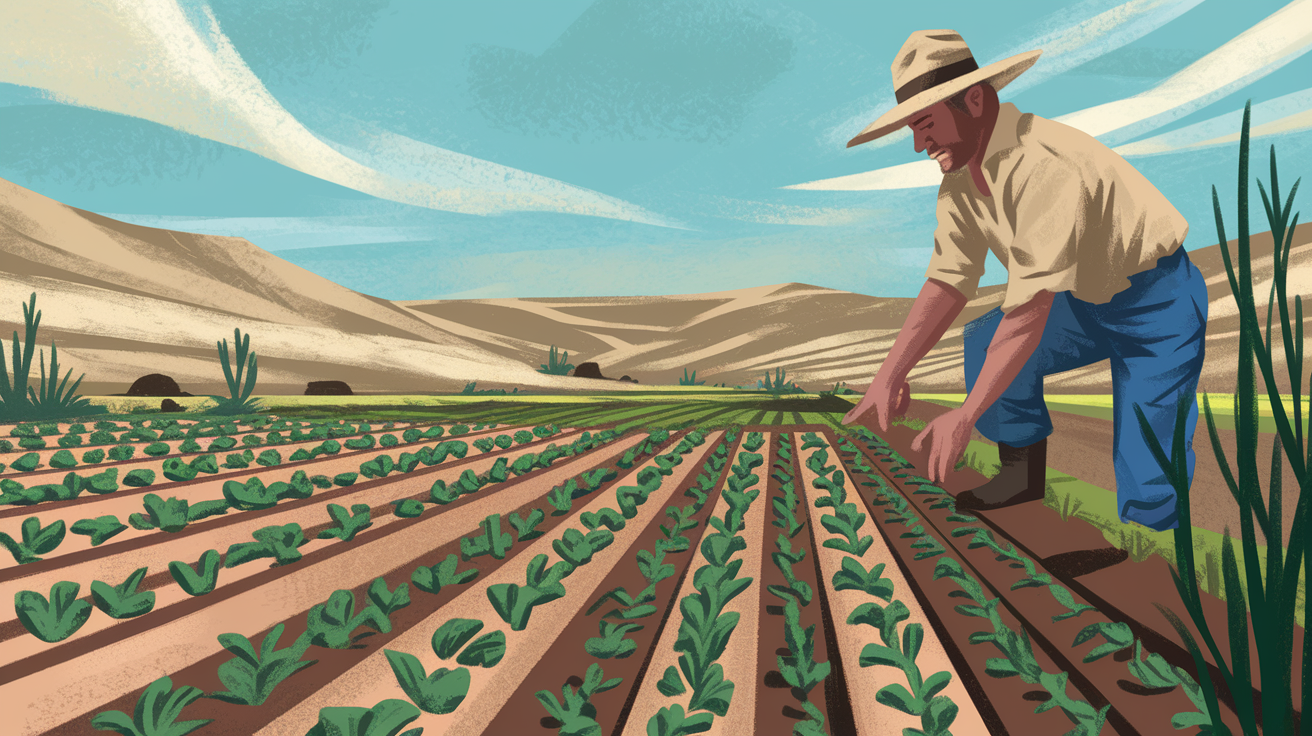
Because successful dry area crop selection is about more than picking drought-tolerant varieties — it’s about adopting a resilient mindset. This is a farm philosophy of working with nature, adjusting farming techniques to the native climate and environment. Farmers need a long view—dry farm success is sometimes an exercise in slow soil building and seasonal experimentation.
Against such challenges as erratic weather and climate uncertainty, a resilient mindset is essential to surmounting these obstacles. Dryland farming is more than a technique – it’s an ethos rooted in science, tradition and perpetual innovation to contend with climate fluctuation and stress on water resources.
Ecosystem Mimicry
Watching natural ecosystems in the deserts teaches me how native plants survive on little water. These observations guide the layout of dry farms, seeking to replicate the diversity and architecture of local native plants, which encourages ecological balance.
Interplanting perennial vegetables, fruit trees and native plants, you can design a resilient, self-sustaining agricultural ecosystem that encourages biodiversity. By leveraging regenerative agriculture techniques like cover cropping and reduced tillage, it enriches the soil.
A lot of farmers think of soil as a water battery, and dry farming taps that reserve. Conservation tillage combined with drought resistant varieties and soil moisture management have become critical for sustainable production and environmental conservation in arid regions. Yet further resilience to environmental stressors within these mimicked systems may be possible through recognizing the importance of selecting crop varieties that form an adaptive symbiotic relationship with endophytes.
Patience and Observation
Careful monitoring of soil moisture, plant growth, and weather patterns during the growing season is essential. Taking meticulous notes on crop performance, rainfall and conditions helps guide future readjustments.
Farmers are taking a resilient mindset to heart, trying out novel approaches — like exposing crops to the elements in real-time, out in the field, and choosing year-on-year through farmer-led breeding — to hack the unpredictable climate. Be patient with dry spells, faith in dryland crops and stored-up soil moisture.
Tailoring dry farming approaches to ongoing learning and the specific challenges of each dry year is important. Staying comfortable with the unknown, and innovating accordingly — including things like no-till systems — can cut water use dramatically and boost soil organic matter long-term.
Community Knowledge
Engaging with local veteran dry farmers and agronomists provides invaluable avenues to exchange wisdom and techniques. If you participate in your local dry farming farmshares or workshops, farmers can learn about successful dryland strategies and varietals first-hand.
Tapping into expertise from agricultural research centers and extension services, particularly those specializing in arid land agriculture, offers vital scientific support and innovation. With increasing climate variability, farmers are thinking beyond the plant, adopting a resilient mindset that combines biotechnology, precision agriculture and climate-smart solutions.
Passing along your own dry farming knowledge and lessons learned to new farmers adds to a shared wisdom that supports sustainable farming for the whole community.
Common Dry Farming Myths
A lot of dry farming myths get it wrong, influencing how we see this vital technique. We need to dispel these myths to bring more farmers into the fold!
Myth #1 Dry farming only works in very dry, desert-like areas. This is not the case — dry farming can fit many different climates with a dry season. Take Western Oregon for instance, where farmers rely on leftover moisture from the rainy season to produce bountiful crops during the dry summer months.
That dry farming requires a certain soil type is another myth. It functions in numerous soil varieties, such as Veneta loam, which features a clay stratum approximately 14 inches beneath the surface.
Yet another myth says dry farming invariably results in smaller yields. Although yields can occasionally be less than irrigated fields, dry-farmed crops are typically of a higher quality and flavor. It’s true that lower yields affect profits, which is one reason why dry farming is less common in the US.
One farmer has grown organic tomatoes, potatoes, winter squash, garlic and beans without irrigation for 40 years, demonstrating it’s possible. These dry-farmed crops can be more vigorous and resilient, too, particularly in hard stretches like the 2021 heat dome.
Others believe that dry farming is an old-time or obsolete method to farm. Although dry farming has been employed for centuries — for example, in the Mediterranean — modern dry farming is informed by cutting-edge soil science & research.
It’s a practice that requires careful observation and planning — farmers must steward the soil moisture and choose the correct crops to thrive.
Finally, dry farming doesn’t imply that crops receive no water whatsoever. That is, dry farming depends on rain and clever means of conserving that water, rather than irrigation. It saves a ton of water — one study showed it can save roughly 16,000 gallons of water per acre annually.
Water-Wise Garden Containers
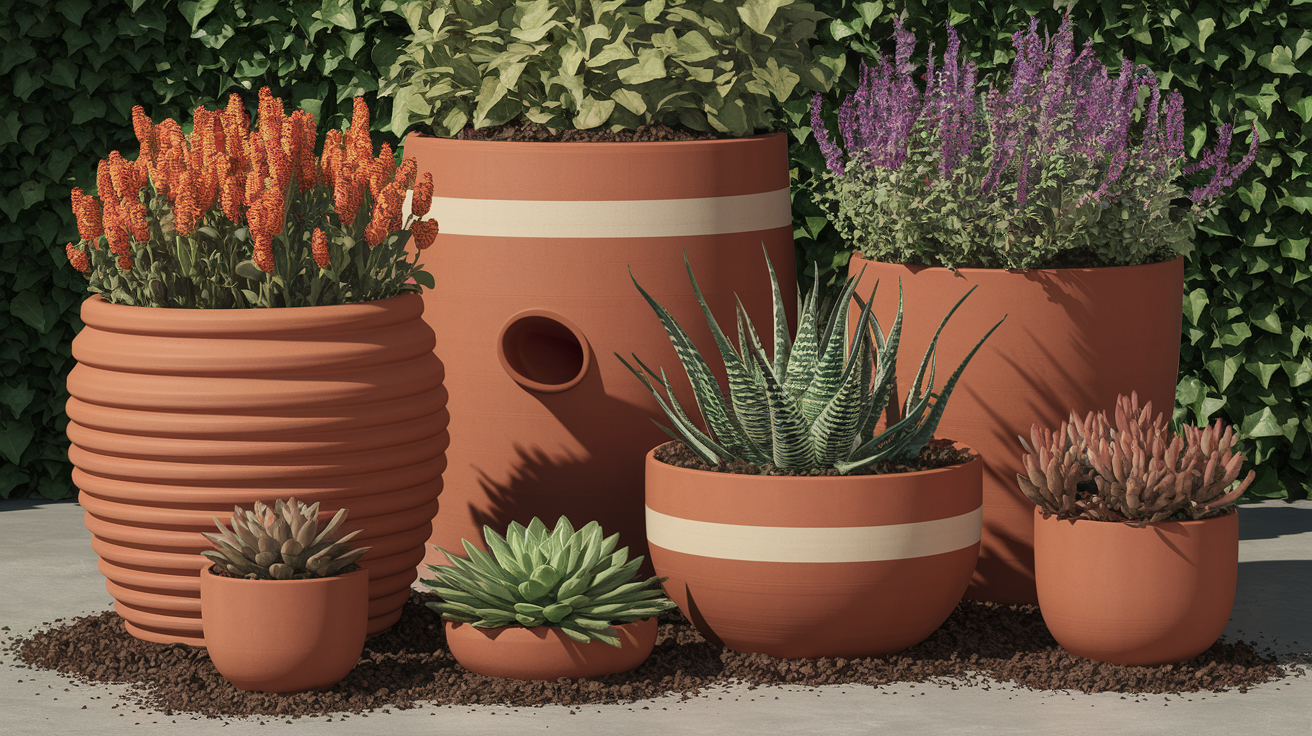
Water-wise garden containers are a clever way to save water and beautify your space. These unique containers provide an environmentally friendly alternative to high water use landscapes, particularly when incorporating native plants from dryland areas or coastal regions. They save you water and watering time during those hot summer months, making them ideal for dry agriculture practices.
For container selection, go for large, deep ones made of unglazed terracotta or ceramic. They’re not just decorative; they facilitate air circulation and keep the soil cooler — both of which can drastically reduce evaporative loss relative to flimsy plastic pots. Deeper planters offer additional room for root growth, which aids plants in reaching available water resources.
The key to success is a good quality potting mix, one designed for great drainage as well as water retention. Adding amendments like perlite or vermiculite to your mix enhances aeration and helps retain moisture without becoming soggy. Others have found that various soil mixes work best for drought-adapted plants depending on their specific local conditions, so it’s worth looking into what works for successful crop growth locally.
For plants, concentrate on drought-tolerant species and succulents that are naturally adapted to arid conditions. Other great options are plants like different types of sedums, agaves or aloes. Most of these plants typically have hard, leathery leaves or are fleshy and capable of storing water, so can do well when watered infrequently.
Certain succulents can do fairly well in rather small spaces, so they make perfect container residents. A clever combination of growth habit and bloom time plants not only gives your container garden visual interest and dynamism, but benefits local pollinators by giving them a steady stream of nectar and pollen.
To really reduce your watering frequency, incorporate self-watering planters. These systems generally have a reservoir built in that gradually disperses water to the soil as the plant requires. Another trick is to supplement your potting mix with water-absorbing crystals.
These crystals suck up that extra water and then drip it back into the soil, increasing your time between watering and promoting sustainable agriculture practices.
Conclusion
To farm the dry areas, you select smart crops. You set your ground just right, with clever dry farming means. This technique conserves A LOT of water. You receive nutritious crops, even with minimal precipitation. A lot of the old stuff about dry farming misses the mark. It’s not a trick, it really works. You cultivate in water wise pots for tiny nooks. You figure out how to optimize for dry spells, how to coerce nature’s current. This clever method assists you to cultivate your food using less water and makes your garden flourish. If you want to start your own dry garden, check out local nurseries. Just know where to find seeds and plants that grow strong with little water.
Frequently Asked Questions
What is the main goal of dry farming?
We aim to cultivate dry farming crops using the moisture left in the soil by the rains. By enhancing your soil’s water holding capacity, you can minimize irrigation during the dry months.
What are the best beginner crops for a dry garden?
Begin with deep-rooted plants, such as winter squash, melons, and some of the best dry farming crops like dry-farmed tomatoes and beans. These crops excel in dry agriculture practices, diving deep into the soil to discover water, making them quite robust.
Does dry farming mean I never have to water my plants?
Not necessarily. Young transplants usually require a little watering to become established. The key in dry farming practices is depending on stored soil moisture to get your plant through its entire life cycle, rather than regular, shallow irrigation.
How do I prepare my soil for dry farming?
Concentrate on incorporating organic matter for successful dryland farming. Stir in lots of compost to maintain sponge-like soil, and piling mulch on top is key for preserving moisture in dry farming crops.
Can I use dry farming techniques in containers?
It’s challenging, as pots dry out quickly, especially in dryland conditions. If you attempt dry farming, go with HUGE containers (25+ gallons) and super drought-tolerant plants for better crop yields.
Are native plants a good choice for a dry garden?
Yep, they are a great pick for sustainable agriculture. Native plants are already suited to your local climate and rainfall, making them ideal for dry farming practices.